Artificial intelligence security at school encompasses two distinct but overlapping domains: AI-powered physical security systems that protect students and staff on campus (video surveillance, threat detection, access control), and cybersecurity programs that protect school networks, student data, and administrative systems from cyberattacks. Both domains are expanding rapidly — K-12 schools in the United States reported over 1,300 cybersecurity incidents in 2023 alone (K-12 Security Information Exchange data), while school shootings and physical threat events have driven significant investment in AI-powered surveillance and behavioral threat detection. Understanding how AI is being deployed in school security, what the technology can and cannot do, and what privacy and ethical considerations accompany it gives administrators, parents, and policymakers the context to evaluate these systems responsibly.
- AI-powered school security covers two areas: physical safety (AI surveillance, weapon detection, access control) and cybersecurity (protecting school networks, student data, and administrative systems from cyberattacks).
- K-12 schools are among the most targeted sectors for ransomware attacks — the Los Angeles Unified School District breach (2022) exposed data on 2,000+ students and cost over $1.5 million to remediate.
- AI weapon detection systems from vendors like Evolv Technology and Omnilert claim 99%+ weapon detection accuracy but have faced scrutiny over false positive rates and civil liberties implications.
- The Student Privacy Protection Act and FERPA (Family Educational Rights and Privacy Act) govern how student data can be collected and stored by AI security systems.
- The most effective school security AI programs combine physical detection with human review — no AI system should make autonomous decisions about students without trained human assessment.
AI-Powered Physical Security in Schools: Surveillance, Weapon Detection, and Access Control
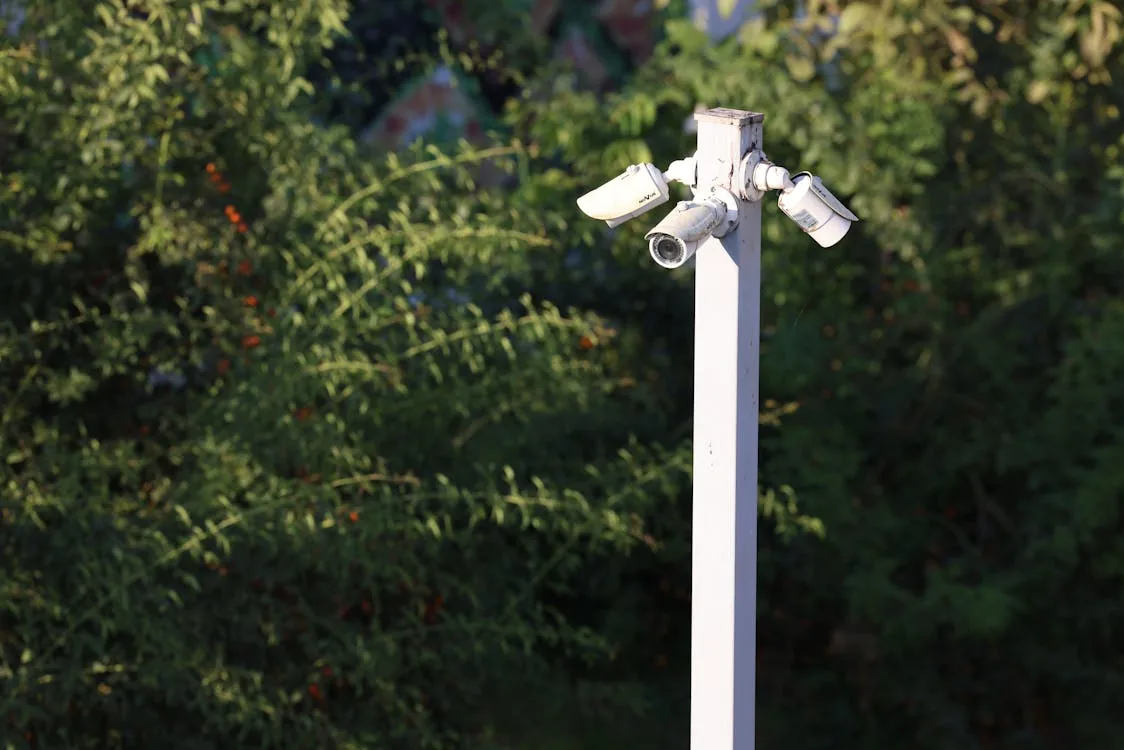
Physical security AI in schools operates through three main technology categories that are increasingly integrated into unified campus security platforms. Video analytics platforms — AI software layered onto existing camera systems — analyze live feeds for behavioral anomalies: unauthorized individuals in restricted areas, crowds forming suddenly, or perimeter breaches occurring outside school hours. These systems do not require replacing existing camera infrastructure; vendors like Motorola Solutions (VideoIQ) and Avigilon apply analytics to existing IP camera streams, generating alerts when predefined behavioral patterns are detected.
AI Weapon Detection: Technology, Accuracy Claims, and Reality
The most visible AI school security application is weapon detection — systems designed to identify firearms or weapons before they enter school buildings. Evolv Technology’s AI-powered security screening system is deployed in over 3,000 locations including schools, using electromagnetic screening combined with AI to identify concealed weapons without requiring students to remove bags. Omnilert’s Gun Detect system uses computer vision trained on millions of images to identify firearms in camera feeds, claiming sub-second detection times. These vendors report accuracy rates of 99%+ in controlled conditions, but independent evaluations have documented false positive rates that are operationally significant in high-traffic school environments — systems trained primarily on handguns have difficulty with novel weapon types or objects that electromagnetically resemble firearms. The critical operational principle is that AI weapon detection systems should alert human security personnel for visual confirmation, not trigger automated lockdowns — false positives in school environments cause significant psychological harm to students.
Access Control and Visitor Management
AI-powered access control represents the most practically deployed school security technology, with relatively lower controversy than surveillance cameras. Visitor management systems like Raptor Technologies and Verkada use AI to instantly screen visitor IDs against registered sex offender databases and custom watch lists, completing background verification in seconds versus the minutes required by manual processes. These systems process over 30 million visitor entries per year across US schools, according to Raptor Technologies. Facial recognition access control — where students and staff gain entry via facial scan — is being piloted in some districts, but has faced legal challenges and policy prohibitions in multiple states (New York, California) due to concerns about collecting biometric data from minors. The Children’s Online Privacy Protection Act (COPPA) and state-level biometric privacy laws (Illinois BIPA) create a complex legal landscape for facial recognition specifically.
School Cybersecurity and AI: Protecting Student Data and Networks

While physical security AI captures more media attention, cybersecurity AI for schools addresses the statistically larger and more consistent threat: cyberattacks targeting student data, financial systems, and operational infrastructure. The K-12 sector is among the top targeted industries for ransomware attacks, for several reasons — school districts hold extensive personal data on minors (highly valuable on dark web markets), IT budgets and staffing are limited compared to private sector organizations of equivalent data volume, and legacy systems (particularly student information systems and administrative databases) are frequently unpatched and vulnerable. The FBI, CISA, and MS-ISAC (Multi-State Information Sharing and Analysis Center) jointly identified K-12 institutions as a high-priority ransomware target sector beginning in 2020, a designation that has not changed.
AI-Powered Cybersecurity Tools for K-12 Institutions
School cybersecurity AI addresses the same detection challenges as enterprise security: identifying threats that signature-based tools miss, reducing alert volumes that overwhelm small IT teams, and detecting anomalous behavior in student and staff accounts. The most practical AI security tools for K-12 budgets are: endpoint detection and response (EDR) platforms with AI-driven behavioral detection (Microsoft Defender for Endpoint, included with the Microsoft 365 A1/A3 education licenses that most districts already hold); email security AI that detects phishing targeting students and staff (Google Workspace for Education includes AI-powered spam and phishing filtering); and identity threat detection that flags unusual login patterns — logins from unexpected geographies, bulk file access, or privilege escalation — that indicate compromised student or staff accounts. MS-ISAC provides free threat intelligence feeds and incident response support specifically to K-12 districts, a resource that significantly extends limited school IT capabilities at no cost.
Student Data Privacy and AI Security Ethics
The ethical and legal dimensions of AI security at school are more complex than in enterprise settings because the subjects are minors in a mandatory education context. FERPA (Family Educational Rights and Privacy Act) governs all student education records, requiring parental consent for data sharing outside the institution. AI surveillance systems that record and analyze student behavior create education records under FERPA interpretations — meaning footage of students on school property may carry parental access rights. The National Education Association and American Civil Liberties Union have both published guidance opposing continuous AI surveillance of students, citing developmental harm from living under surveillance during formative years and disproportionate impact on students of color (facial recognition systems have documented higher error rates for darker-skinned individuals, per NIST studies). Best practice for school administrators evaluating AI security is to limit data retention (video footage purged within 30-60 days absent a specific incident), maintain human review for all AI-generated alerts about specific students, and conduct transparent community engagement before deploying surveillance systems.
Frequently Asked Questions
What is AI security at school?
AI security at school covers two areas: AI-powered physical security (video analytics, weapon detection, access control systems that identify threats on campus) and cybersecurity AI (tools that protect school networks, student data, and administrative systems from ransomware, phishing, and data breaches).
How does AI weapon detection work in schools?
AI weapon detection systems like Evolv Technology use electromagnetic screening and computer vision to identify concealed firearms as individuals pass through. They analyze electromagnetic signatures and visual patterns in camera feeds to flag potential weapons, alerting human security personnel for confirmation before any response is triggered.
Are K-12 schools frequently targeted by cyberattacks?
Yes — K-12 schools are among the top targeted sectors for ransomware. They hold extensive personal data on minors, have limited IT staffing and budgets, and frequently run unpatched legacy systems. The FBI and CISA have designated K-12 institutions a high-priority ransomware target since 2020.
What free cybersecurity resources are available to schools?
MS-ISAC (Multi-State Information Sharing and Analysis Center) provides free threat intelligence feeds and incident response support to K-12 districts. Microsoft and Google offer AI-powered security tools (Defender for Endpoint, phishing filtering) included in their education license tiers already used by most districts.
Can schools use facial recognition for security?
Facial recognition in schools is legally restricted in several states including New York and California due to biometric data privacy concerns. Federal law (COPPA, FERPA) and state biometric laws (Illinois BIPA) create significant compliance requirements for collecting facial data from minors, and civil liberties organizations broadly oppose the practice.
What privacy rules govern AI surveillance of students?
FERPA (Family Educational Rights and Privacy Act) governs student education records, which may include AI surveillance footage. AI systems that record student behavior on school grounds can create FERPA-covered records requiring parental access rights. Best practice is to limit video retention to 30-60 days absent a specific incident and conduct community engagement before deploying any surveillance AI.