
Security intelligence operations are the organizational and technical infrastructure that convert raw threat data into protective action. The term covers everything from a small security team running a SIEM with a few analysts, to a fully staffed 24/7 Security Operations Center running integrated SIEM, SOAR, threat intelligence platforms, and AI-native detection. What these implementations share is the goal of closing the gap between observing a threat signal and acting on it faster than the attacker can execute. According to the SANS 2025 SOC Survey, 79% of SOCs operate 24/7 — but 69% still rely on manual reporting, revealing a persistent lag between coverage ambition and operational maturity.
- Security intelligence operations combine SIEM, SOAR, threat intelligence platforms, and EDR/XDR into an integrated stack that converts threat data into automated or analyst-driven response.
- 79% of SOCs operate 24/7 (SANS 2025), but 69% still rely on manual reporting — indicating significant maturity gaps in most organizations.
- Building and operating a 24/7 SOC costs $1.5 million to $5 million annually, depending on staffing and automation maturity.
- The six intelligence operations phases (JP 2-0): planning, collection, processing, analysis, dissemination, and feedback — applicable to both military and corporate intelligence operations.
- AI-powered security intelligence operations can reduce alert triage time significantly by correlating alerts against historical patterns and threat intelligence before surfacing them to analysts.
What Security Intelligence Operations Are and How They Work

Security intelligence operations is the practice of systematically collecting threat data, analyzing it for organizational relevance, and translating the analysis into decisions and actions that reduce risk. The term spans both corporate security contexts — SOC operations, threat hunting, incident response — and government/military contexts where intelligence operations support command decisions and mission planning. In both domains, the core challenge is the same: raw data is abundant and largely useless; actionable intelligence is scarce and requires structured process to produce.
The Intelligence Operations Cycle
The framework that governs intelligence operations in the U.S. military — defined in Joint Publication 2-0 — identifies six categories that apply with equal force to corporate security operations:
- Planning and Direction: Defining intelligence requirements based on the organization’s specific threat profile, assets, and mission. Without clear requirements, collection efforts cover everything poorly rather than the relevant threat landscape specifically.
- Collection: Gathering data from OSINT, dark web monitoring, commercial threat feeds, ISAC feeds, internal telemetry (logs, network traffic, endpoint data), and malware analysis.
- Processing and Exploitation: Converting raw collected data into formats that analysts can use — normalizing, deduplicating, translating, and extracting structured indicators from unstructured sources.
- Analysis and Production: Identifying patterns, attributing activity to threat actors or campaigns, and assessing relevance and urgency for the specific organization. This is where data becomes intelligence.
- Dissemination and Integration: Delivering intelligence products to the right audiences in usable formats — IOCs pushed to SIEM and firewall rules, strategic briefings to executive leadership, tactical reports to SOC analysts.
- Evaluation and Feedback: Assessing whether intelligence was accurate, timely, and actionable. Feedback closes the loop and shapes the next planning cycle — without it, intelligence programs optimize for what’s easy to collect rather than what’s useful to act on.
Corporate vs. Military Security Intelligence Operations
In military contexts, the U.S. Army Intelligence and Security Command (INSCOM) coordinates intelligence operations that support military missions — human intelligence, signals intelligence, imagery analysis, and counterintelligence. The intelligence products feed command decisions at strategic and tactical levels. In corporate contexts, security intelligence operations feed SOC responses, vulnerability management priorities, incident response decisions, and executive risk reporting.
The methodological parallels are significant — both disciplines use the same intelligence cycle, the same analytic tradecraft, and many of the same frameworks (MITRE ATT&CK is used by both government and private sector analysts). The key difference is authority and scope: corporate security intelligence operates within legal and privacy constraints that differ from those governing classified intelligence programs, and the “enemy” is an adversary operating against business assets rather than a nation-state targeting national security.
Operations Security (OPSEC) and Intelligence Operations
Operations security (OPSEC) is the counterpart to intelligence operations — where intelligence focuses on understanding adversary activity, OPSEC focuses on denying adversaries the information they need to plan and execute attacks. The private sector adopted OPSEC frameworks from the military as a defensive measure against competitive intelligence collection. Cyber threat intelligence and OPSEC work together: intelligence operations reveal how adversaries collect information about targets, and that knowledge drives OPSEC procedures that reduce the information available to them.
The Security Intelligence Operations Stack: SIEM, SOAR, and TIP
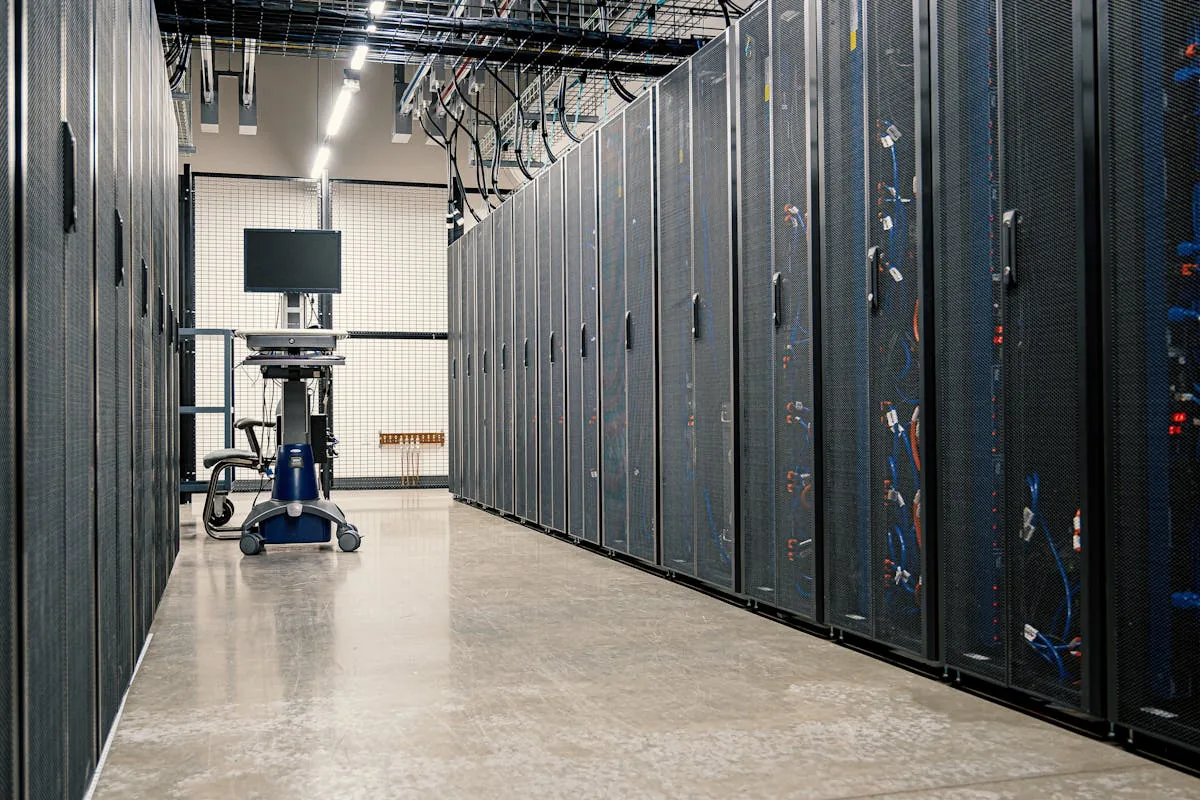
Modern security intelligence operations run on an integrated technology stack that brings together data aggregation, automation, and intelligence management. Each component serves a distinct function, and the value of the stack comes from integration — platforms that work in isolation produce fragmented intelligence that requires manual assembly to become actionable.
SIEM: The Data Aggregation and Detection Layer
Security Information and Event Management (SIEM) platforms are the foundational data layer in security intelligence operations. They ingest logs and telemetry from across the environment — endpoints, servers, network devices, cloud services, applications — normalize that data into a common format, and apply detection rules and correlation logic to identify suspicious patterns. According to Splunk’s 2026 analysis of SIEM capabilities, modern SIEMs integrate machine learning for anomaly detection, behavioral analytics for user and entity behavior, and cloud-native architectures that can scale to petabyte-scale data volumes.
The SIEM’s limitation is that it sees only what its detection rules and data sources cover. It identifies that something anomalous is happening; it does not automatically explain who is behind it, what campaign it is part of, or what the likely next steps are. That context requires threat intelligence integration.
SOAR: Automation and Orchestration
Security Orchestration, Automation and Response (SOAR) platforms address the gap between alert generation and analyst action. When a SIEM detects a suspicious event, SOAR platforms execute automated playbooks — querying threat intelligence platforms for context, enriching the alert with geolocation and asset data, blocking malicious IPs at the firewall, quarantining affected endpoints, and opening tickets in ITSM systems. This automation reduces mean time to respond (MTTR) and allows analysts to focus on investigation rather than mechanical triage steps.
A key SOAR integration pattern: configure the platform to automatically query threat intelligence feeds for every new IOC encountered — IP addresses, file hashes, domains — using sources like MISP, VirusTotal, or commercial feeds. Malicious indicators feed directly into blocking rules, reducing the window between detection and containment from hours to minutes.
Threat Intelligence Platforms (TIP): The Intelligence Management Layer
Threat Intelligence Platforms aggregate intelligence from internal telemetry, OSINT feeds, dark web monitoring, malware repositories, ISAC feeds, and commercial intelligence sources — normalize them, and distribute actionable indicators and context to SIEM, SOAR, and endpoint tools. The 2026 assessment from Cyware and other TIP analysts: these platforms “are no longer a luxury but a fundamental necessity for modern security operations,” with the best 2026 platforms moving beyond simple data feeds to provide contextualized, automated, and prioritized intelligence.
TIP integration with SIEM and SOAR creates the feedback loop that keeps intelligence current: new IOCs discovered in live incidents feed back into the TIP and update detection rules automatically. Organizations with this full-loop integration demonstrate measurably faster detection and response — the 2025 SOC data shows that organizations using integrated SIEM+SOAR+TIP stacks resolve incidents faster than those relying on any single component alone.
Building Security Intelligence Operations: Costs, Challenges, and 2026 Best Practices

The business case for security intelligence operations is clear in principle. In practice, the cost, staffing requirements, and integration complexity create real barriers — particularly for mid-market organizations that cannot sustain a full 24/7 SOC but still face the same threat actors that target enterprises. The 2026 landscape offers more options than ever for right-sizing intelligence operations to organizational needs.
Cost and Staffing Reality
Building and operating a 24/7 SOC with meaningful security intelligence operations capability costs $1.5 million to $5 million annually. A fully mature operation with dedicated threat hunters, advanced TIP integration, and senior analysts reaches the higher end of that range. These costs cover staffing (analysts across three shifts, a threat intelligence team, incident response capacity), technology (SIEM licensing is typically $100K–$500K+ annually for enterprise environments), and the operational overhead of keeping detection rules and threat feeds current.
The SANS 2025 SOC Survey finding that 69% of 24/7 SOCs still rely on manual reporting is telling: coverage hours and operational maturity are not the same thing. Many organizations have extended their monitoring window without investing in the automation and integration that makes that coverage effective. Manual reporting means manual alert triage, manual threat intelligence lookups, and manual incident documentation — all of which extend response times and increase analyst burnout.
Managed Security Intelligence Operations vs. In-House
For organizations unable to sustain an in-house SOC at necessary maturity levels, managed security intelligence services offer a practical alternative. MDR (Managed Detection and Response) providers combine the SIEM, SOAR, and TIP infrastructure with 24/7 analyst coverage — effectively providing security intelligence operations as a service. The model works best when organizations retain internal security leadership that can define intelligence requirements and act on escalations, while outsourcing the operational monitoring and first-response functions.
2026 Best Practices for Security Intelligence Operations
The guidance from CISA, SANS, and leading MSSP practitioners converges on several principles for effective security intelligence operations in 2026:
- Define intelligence requirements before selecting tools: What threat actors are most relevant to your sector? What assets are most valuable? These answers should drive detection rule priorities, not vendor default configurations.
- Integrate, don’t aggregate: SIEM, SOAR, and TIP tools that share data bidirectionally produce measurably better outcomes than those that operate in parallel silos. Prioritize platforms with native integrations or strong API ecosystems.
- Close the feedback loop: Intelligence that is collected but never acted on, and action that is never reviewed for effectiveness, both indicate a broken intelligence cycle. Build structured feedback mechanisms that connect SOC outcomes back to intelligence requirements.
- Automate triage, not analysis: AI and SOAR automation handle high-volume, low-complexity triage well — freeing analysts for the contextual judgment that requires human expertise. Fully automated responses to complex incidents without analyst review create risks.
- Measure what matters: Mean time to detect (MTTD) and mean time to respond (MTTR) are the primary performance metrics for security intelligence operations. Organizations should track these against baseline and benchmark against sector peers.
Frequently Asked Questions
What are security intelligence operations?
Security intelligence operations are the systematic processes and technologies that collect threat data, analyze it for organizational relevance, and translate that analysis into protective action. They combine SIEM, SOAR, threat intelligence platforms, and analyst expertise to create an integrated security operations capability — from data collection through incident response and feedback.
What is the difference between a SOC and security intelligence operations?
A Security Operations Center (SOC) is the organizational structure — the people, processes, and facilities. Security intelligence operations is the broader practice that a SOC executes — including the intelligence cycle, threat hunting, and the technology integration that makes monitoring and response effective. A SOC without strong intelligence operations capability is reactive; security intelligence operations adds the proactive, context-driven analysis that allows anticipation of threats rather than just response to them.
How much does it cost to build security intelligence operations?
Building and operating a 24/7 SOC costs approximately $1.5 million to $5 million annually, depending on staffing levels and technology maturity. SIEM licensing alone typically runs $100K–$500K+ for enterprise environments. Organizations that cannot sustain this investment often use managed detection and response (MDR) providers to access security intelligence operations capabilities as a service.
What is the role of threat intelligence in security operations?
Threat intelligence provides the context that transforms raw security alerts into actionable decisions. It tells security teams who is behind an attack, what TTPs they use, what campaign it is part of, and what the likely next steps are. Integrated with SIEM and SOAR, threat intelligence reduces false positives, accelerates incident triage, feeds automated blocking rules, and enables proactive threat hunting.
What does the six-phase intelligence cycle mean for corporate security?
The six phases — planning, collection, processing, analysis, dissemination, and feedback — define how corporate security intelligence operations should be structured to produce reliable, actionable intelligence. Organizations that skip the planning phase collect the wrong data; those that skip feedback fail to improve. The cycle ensures intelligence programs remain focused on what’s useful rather than what’s convenient to collect.