
Artificial intelligence in security and surveillance has shifted physical security from passive recording to active detection — cameras now identify specific individuals across thousands of frames, flag behavior deviations in real time, and trigger automated responses without human operators watching every feed. The market reflects this transformation: the global AI in video surveillance market was valued at USD 6.51 billion in 2024 and is projected to reach USD 28.76 billion by 2030 at a CAGR of 30.6% (Grand View Research) — one of the fastest-growing segments in the broader AI market. The technology delivering this growth raises equal regulatory attention: the EU AI Act’s ban on real-time remote biometric identification by law enforcement took effect February 2, 2025, and real-world facial recognition accuracy data diverges so sharply from controlled benchmarks that major police deployments have produced effective error rates exceeding 80% in independent reviews. Understanding both what AI surveillance can do and where its performance claims fall apart is the foundation of any responsible deployment or procurement decision.
- AI video surveillance market: $6.51B (2024) → $28.76B (2030) at 30.6% CAGR (Grand View Research); AI physical security market: $43.6B (2024).
- Axis Communications ARTPEC-9 SoC (November 2024): triples video analytics performance vs. prior generation; first network camera SoC with AV1 encoding.
- NIST controlled testing: best facial recognition algorithms achieve false positive rates of 1 in 1,000,000 — London Metropolitan Police real-world LFR: 8 confirmed accurate matches out of 42, effective error rate exceeding 80%.
- NIST data: false positive rates for Black women are tens to hundreds of times higher than for Eastern European males aged 20–35.
- EU AI Act (effective February 2, 2025): bans real-time remote biometric identification by law enforcement, facial image scraping, and emotion recognition in workplaces/schools — penalties up to €35M or 7% of global revenue.
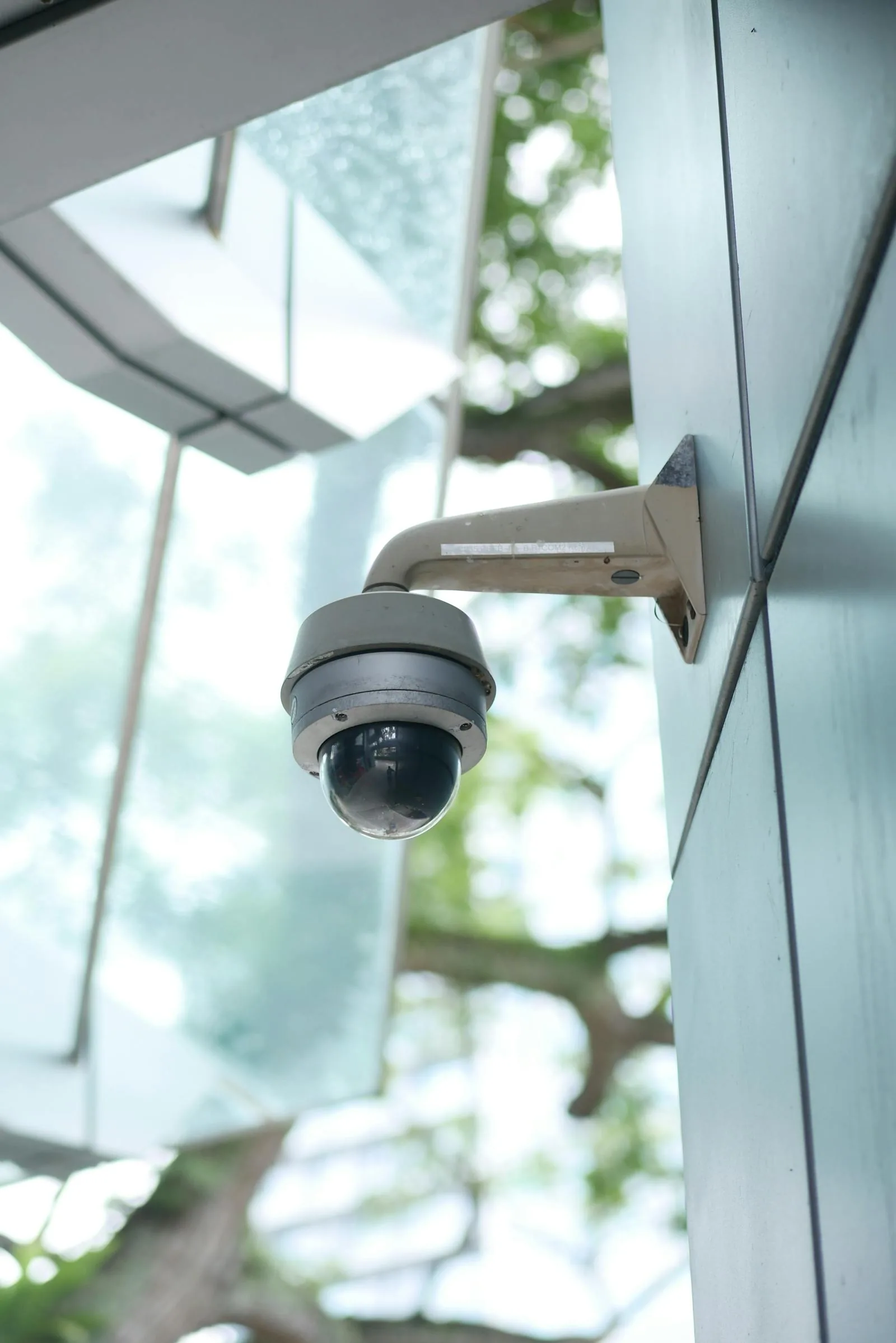
AI Surveillance Technology: Smart Cameras, Detection, and Market Growth
The hardware segment — AI-enabled cameras and edge-processing devices — accounted for 40.48% of global AI surveillance revenue in 2024, reflecting the capital intensity of physical surveillance infrastructure deployment. Asia-Pacific dominated with 36.55% of global AI surveillance revenue in 2025, followed by North America at 33.6%. China operates an estimated 600 million surveillance cameras as of 2025 — approximately one per 2.3 citizens — while the United States has deployed more than 85 million cameras nationally. More than 1,000 smart city initiatives worldwide now integrate intelligent video monitoring for traffic management, public safety, and environmental monitoring, creating the demand signal that is driving the 30.6% CAGR in AI video analytics investment.
Video Analytics, Smart Camera Platforms, and Deployment Scale
The AI capabilities embedded in modern surveillance infrastructure go well beyond motion detection. Axis Communications’ ARTPEC-9 system-on-chip, announced November 2024, triples video analytics performance compared to the previous ARTPEC-8 generation, doubles graphics processing speed, introduces AV1 encoding (the first network camera SoC to do so, reducing H.264 bitrate by 20%), and supports the on-device AI inference that enables real-time object classification, crowd analytics, and behavioral detection at the camera edge rather than at a central server. The first ARTPEC-9 camera, the AXIS Q1728 (8 MP), became available Q1 2025. Hikvision, the world’s largest video surveillance company by revenue at RMB 92.5 billion (~USD 12.9 billion) in 2024, and Motorola Solutions (which acquired Avigilon in 2018 and reported USD 23.7 billion in 2024 revenue) represent the market poles: Hikvision and Dahua are banned from U.S. federal contracts under NDAA Section 889, while Motorola Solutions’ Avigilon and Axis are NDAA-compliant options for government and regulated enterprise deployments. Verkada, headquartered in San Mateo, operates a closed cloud-native platform and positions itself as the NDAA-compliant alternative for federal and enterprise buyers replacing Hikvision/Dahua infrastructure.
Real-world deployments document the operational gains from AI-enabled surveillance: a large international airport deploying more than 6,000 AI-driven cameras across terminals and cargo areas improved security screening efficiency by nearly 26%; a national transit authority deploying more than 15,000 AI-enabled cameras across metro stations reduced security response time by nearly 30%. These outcome figures — screening efficiency improvements and response time reductions — reflect the operational case for AI-enabled surveillance that is driving deployment, separate from the accuracy controversies that facial recognition specifically generates. The intelligent video analytics sub-segment alone was worth USD 8.51 billion in 2024 and is forecast to reach USD 52.89 billion by 2033 (Emergen Research), reflecting the breadth of analytics applications beyond facial recognition: object classification, crowd density, perimeter breach, license plate recognition, and behavioral anomaly detection. Security analytics platforms that integrate video intelligence with broader security event data provide the correlation capability that turns surveillance footage into actionable security intelligence.
AI in Physical Security: Perimeter Detection and Access Control
Physical security AI extends beyond cameras into the broader infrastructure: AI-powered perimeter intrusion detection, access control biometrics, and automated alarm response. The AI in physical security market was valued at USD 43.6 billion in 2024, growing at 7.43% CAGR through 2033 (UnivDatos) — a substantially larger market than video surveillance alone, reflecting the full scope of physical security systems AI is enhancing. The perimeter intrusion detection systems market reached USD 62.9 billion in 2024 and is forecast to reach USD 195.8 billion by 2033 at 12.77% CAGR (IMARC Group), driven by critical infrastructure protection requirements at airports, data centers, power generation facilities, and border security installations.
AI in perimeter security addresses the false alarm problem that has historically limited the operational value of sensor-based detection: traditional motion sensors generate high false-alarm rates from animals, wind, and lighting changes that require human review. AI classification models trained on video at perimeter boundaries distinguish human intrusion from environmental triggers with substantially lower false-alarm rates, enabling automated response escalation rather than all-alerts requiring human triage. Avigilon’s Unusual Motion Detection and Genetec’s AI-powered event correlation both represent production implementations of this approach — filtering sensor events through AI classification before escalating to human operators. AI-powered threat detection capabilities developed for cybersecurity are converging with physical security AI as security operations centers increasingly manage both physical and digital threat surfaces from unified platforms.

Facial Recognition: Accuracy Benchmarks, Real-World Performance, and Regulation
Facial recognition represents the highest-capability and highest-controversy application of AI in surveillance — and the gap between benchmark accuracy and real-world performance defines the regulatory response it has generated. NIST’s Face Recognition Vendor Technology (FRVT) evaluation provides the industry standard for algorithm accuracy; EU AI Act Article 5 and U.S. municipal bans provide the legal constraints; and independent reviews of live deployments document where benchmark accuracy fails to translate to real-world operational reliability.
How Accurate Is AI Facial Recognition — and Where It Fails
Under controlled conditions using NIST’s FRVT benchmarks, top-performing algorithms from NEC, SenseTime, and IDEMIA achieve false positive rates below 0.15% at 1-in-1,000 false positive identification rates — and in best-case passport-matching scenarios, false negatives of approximately 2 per 1,000 with false positives fewer than 1 in 1,000,000. These numbers justify the technology’s deployment in controlled access scenarios: border crossing passport matching with a stationary, cooperative, well-lit subject against a clean database is a fundamentally different problem from real-time crowd identification in variable lighting, at angle, against a large and poorly curated watchlist.
Real-world deployments document the performance divergence. An independent review of London Metropolitan Police Live Facial Recognition (LFR) trials found that out of 42 matches, only 8 were confirmed accurate — an effective real-world error rate exceeding 80%. NIST’s demographic analysis adds a second dimension: false positive rates for Black women are tens to hundreds of times higher than for Eastern European males aged 20–35, the demographic on which most training datasets are over-represented. This accuracy differential means that real-world facial recognition deployments in diverse urban environments produce disproportionately higher false match rates for specific demographic groups — the finding that has driven most legislative bans. Accuracy is not uniformly distributed across the population; it is concentrated in the demographics that training data over-represents and lowest in the communities most affected by law enforcement surveillance. Security technology deployment decisions that require documented accuracy thresholds and demographic performance parity are emerging as a procurement standard as AI Act requirements propagate through supply chains.
Bans, the EU AI Act, and the Legal Landscape for Biometric Surveillance
At least 16 U.S. cities have banned police use of facial recognition, including San Francisco (the first, 2019), Boston, Oakland, and Portland, Oregon. Portland’s ban is the broadest in the United States: it prohibits both law enforcement and private sector use and allows residents to collect up to $1,000 per violation. California prohibits law enforcement from using biometric surveillance on body camera footage; a 2024 bill that would have expanded law enforcement facial recognition authority was rejected by the California legislature in August 2024.
The EU AI Act, which entered into force August 1, 2024 with prohibited practice enforcement from February 2, 2025, takes the most comprehensive regulatory position on biometric surveillance outside of China’s domestic governance requirements. It absolutely prohibits: untargeted scraping of facial images from the internet or CCTV to build or expand facial recognition databases; real-time remote biometric identification by law enforcement in public spaces (with narrow exceptions for targeted searches, imminent terrorist threats, and prosecution of specified serious crimes); and emotion recognition in workplace and educational settings. Non-compliance penalties reach EUR 35 million or 7% of global annual revenue, whichever is higher. GDPR’s Article 9 classification of biometric data as “special category data” — prohibited from processing without explicit consent or a narrow legal exception — supplements the AI Act’s prohibitions for the EU market. For organizations deploying surveillance AI across EU operations, the combined effect of GDPR Article 9, AI Act Article 5 prohibited practices, and high-risk AI system documentation requirements under Article 6+ creates a compliance architecture that makes biometric surveillance in public spaces effectively impractical for private sector operators. AI security and compliance frameworks that address both the EU AI Act and NIST AI RMF requirements are becoming foundational requirements for enterprise surveillance deployments in regulated markets.
Frequently Asked Questions
What is the AI in video surveillance market worth in 2026?
The global AI in video surveillance market was valued at USD 6.51 billion in 2024 (Grand View Research) and is projected to reach USD 28.76 billion by 2030 at a 30.6% CAGR. MarketsandMarkets estimates a narrower scope at USD 3.90 billion in 2024, growing to USD 12.46 billion by 2030 at 21.3% CAGR. The intelligent video analytics sub-segment (covering behavioral detection, object classification, and crowd analytics) was valued at USD 8.51 billion in 2024 and projected to reach USD 52.89 billion by 2033 (Emergen Research). The broader AI in physical security market — including access control, perimeter detection, and alarm management — was valued at USD 43.6 billion in 2024.
Which AI surveillance camera brands are banned under NDAA Section 889?
NDAA Section 889 prohibits U.S. federal agencies from using surveillance equipment from Hikvision, Dahua Technology, Hytera Communications, Huawei, ZTE, and Uniview. Hikvision is the world’s largest video surveillance company by revenue (RMB 92.5 billion / ~USD 12.9 billion in 2024). Compliant alternatives for U.S. federal and government deployments include Motorola Solutions (Avigilon), Axis Communications, Genetec, Hanwha Vision, and Verkada. The ban applies to equipment procurement for covered contracts — organizations replacing Hikvision/Dahua with NDAA-compliant platforms typically undergo a forklift replacement rather than firmware remediation.
How accurate is AI facial recognition in real-world deployments?
NIST FRVT benchmarks show top algorithms (NEC, SenseTime, IDEMIA) achieving false positive identification rates below 0.001 under controlled conditions — fewer than 1 in 1,000,000 in passport-matching scenarios. Real-world performance diverges significantly: an independent review of London Metropolitan Police Live Facial Recognition trials found that out of 42 matches, only 8 were confirmed accurate — an effective error rate exceeding 80%. NIST demographic analysis shows false positive rates for Black women are tens to hundreds of times higher than for Eastern European males, reflecting training dataset over-representation of specific demographics.
What does the EU AI Act say about facial recognition and biometric surveillance?
The EU AI Act (enforcement of prohibited practices from February 2, 2025) absolutely prohibits: (1) untargeted scraping of facial images from the internet or CCTV to build facial recognition databases; (2) real-time remote biometric identification by law enforcement in public spaces (with narrow exceptions for targeted search, imminent terrorist threats, and prosecution of specified serious crimes); (3) emotion recognition in workplaces and educational settings. GDPR Article 9 classifies biometric identification data as “special category data” requiring explicit consent or legal exception. Combined penalties under AI Act Article 5 violations reach EUR 35 million or 7% of global annual turnover.
How many surveillance cameras are there in the US and China?
China operates an estimated 600 million surveillance cameras as of 2025 — approximately one camera per 2.3 citizens — as part of the largest national surveillance infrastructure ever deployed. The United States has more than 85 million surveillance cameras deployed nationally. Asia-Pacific held 36.55% of global AI surveillance revenue in 2025, reflecting both China’s scale and the broader regional concentration of camera manufacturing and smart city infrastructure investment. More than 1,000 smart city initiatives globally now integrate intelligent video monitoring, concentrated in Asia-Pacific and Middle Eastern markets where smart city investment is fastest-growing.