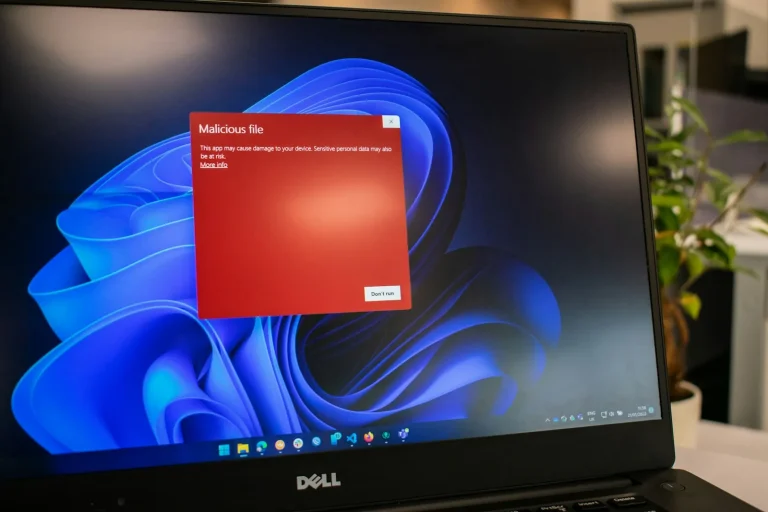
The threat intelligence security service market is the commercial layer where organizations buy finished intelligence, raw threat feeds, and managed analysis services instead of — or alongside — building internal capabilities. The market has two distinct parts that research firms measure differently: the broader threat intelligence market (including platforms and products) and the threat intelligence services segment specifically (managed analysis, professional services, threat hunting subscriptions). The services segment alone is expected to reach $3.27 billion in 2025 and grow to $5.89 billion by 2030, according to Mordor Intelligence. The broader market — including platforms, feeds, and services — is valued at $8.22 billion in 2026 by Fortune Business Insights, with a trajectory toward $31.58 billion by 2034. Two $5+ billion acquisitions in 2024 (Mastercard buying Recorded Future, Google owning Mandiant) have reshaped who controls the top of this market.
- Threat intelligence security services segment: $3.27B in 2025, projected $5.89B by 2030 at 12.47% CAGR (Mordor Intelligence)
- Broader threat intelligence market: $8.22B in 2026, projected $31.58B by 2034 at 18.30% CAGR (Fortune Business Insights)
- Services segment growing at 14.12% CAGR — driven by cybersecurity talent shortage pushing organizations toward managed threat intelligence
- Mastercard acquired Recorded Future for $2.65B (Dec 2024); Google acquired Mandiant for $5.4B — consolidating the top two intelligence vendors
- Solutions (platforms/feeds) command 56.3% of market share; services are the faster-growing segment
Market Size, Segments, and Growth Drivers

What the Market Size Numbers Actually Show
Market size figures for threat intelligence vary significantly depending on what the research firm includes in scope. Fortune Business Insights values the global threat intelligence market at $6.87 billion in 2025, growing to $8.22 billion in 2026 and projecting $31.58 billion by 2034 at an 18.30% CAGR. Mordor Intelligence’s figure for the services segment alone (excluding products and platforms) is $3.27 billion in 2025 growing to $5.89 billion by 2030 at 12.47% CAGR. A separate Mordor analysis of the broader market puts 2026 at $10.38 billion growing to $18.85 billion by 2031 at 12.7% CAGR. MarketsandMarkets, which also includes this market, has previously put 2025 at $13.48 billion.
The variance is definitional. When “threat intelligence” includes raw indicator feeds, enrichment APIs, threat intelligence platforms (TIPs), managed threat hunting services, and professional incident response services, the total is much larger than when it covers only finished intelligence subscriptions and analysis services. For enterprise buyers, the relevant figure is the services segment — what it costs to subscribe to or outsource threat intelligence analysis rather than build it internally. That $3-6 billion segment is the one growing at double digits because the talent shortage in security analysis is structural. The broader context of enterprise threat intelligence programs shows why organizations are moving toward managed services: the internal analysis capability these programs require is expensive to staff and harder to retain than software subscriptions.
The Talent Shortage Driving Managed Threat Intelligence Growth
The services segment of the threat intelligence market is growing faster than the solutions segment (14.12% CAGR vs. roughly 10% for platforms) for one primary reason: organizations cannot hire enough skilled threat analysts. Interpreting threat intelligence — understanding which adversary TTPs are relevant to a specific industry, mapping indicators of compromise to internal telemetry, assessing whether a new vulnerability disclosure affects the organization’s actual attack surface — requires human expertise that is both scarce and expensive. A managed threat intelligence service provides that expertise without the hiring and retention cost.
The three tiers of threat intelligence services reflect different points on the build-vs-buy spectrum. Strategic intelligence subscriptions provide finished reports on adversary groups, campaign trends, and geopolitical risk — useful for security leadership making investment decisions. Tactical intelligence feeds provide machine-readable indicators (IP addresses, domains, file hashes, signatures) that integrate directly into SIEM and endpoint detection platforms. Managed threat hunting services provide a team of analysts who proactively search for threats in the customer’s environment using the vendor’s intelligence as context. The AI security tools that vendors are building into managed services are accelerating the automation of tactical intelligence processing, shifting analyst time toward strategic and contextual analysis where human judgment adds most value.
M&A and Market Consolidation
Two acquisitions in 2024 changed the competitive map of threat intelligence permanently. In December 2024, Mastercard closed a $2.65 billion deal to acquire Recorded Future — the world’s largest commercial threat intelligence company. The acquisition embeds Recorded Future’s predictive intelligence feeds directly into Mastercard’s payment fraud detection infrastructure, a use case that reflects how financial services are integrating threat intelligence into operational risk management rather than treating it as a standalone security function. Google’s $5.4 billion acquisition of Mandiant — now operating as Google Cloud Security — had already reshaped the market by combining Google’s visibility into global internet traffic and threat infrastructure with Mandiant’s incident response and intelligence research capabilities.
CrowdStrike, IBM X-Force, Anomali, and Flashpoint are the other significant market participants. CrowdStrike’s threat intelligence is integrated directly into the Falcon platform, giving it a distribution advantage — customers don’t buy intelligence separately, they consume it as part of the platform subscription. IBM X-Force is the oldest named threat intelligence brand in enterprise security, producing the annual X-Force Threat Intelligence Index and providing managed security services to thousands of enterprises through IBM Security Services. The consolidation trend — fewer, larger players with broader distribution — is compressing pricing for commodity indicators while allowing differentiation on finished intelligence quality, actor attribution accuracy, and industry-specific coverage. How these AI-driven intelligence capabilities compare shapes enterprise vendor selection.
Leading Vendors and Buyer Decision Framework

Recorded Future (Mastercard), Google Mandiant, and CrowdStrike
Recorded Future operates the largest commercial threat intelligence platform, aggregating data from the open web, dark web, technical sources, and government feeds to produce finished intelligence on threat actors, vulnerabilities, and attack infrastructure. Post-Mastercard acquisition, its financial crime intelligence capabilities have expanded significantly. The platform offers intelligence modules covering vulnerabilities, brand protection, third-party risk, and geopolitical threat for specific industries. It is particularly strong for organizations that need finished intelligence on specific threat actor groups and adversary infrastructure tracking.
Google Mandiant brings a different model: incident response depth. Mandiant’s threat intelligence is built from its front-line incident response work — the intelligence team analyzes the actual intrusions the professional services team investigates, creating a feedback loop between real-world breaches and intelligence production. Its Mandiant Advantage platform combines that finished intelligence with threat hunting and attack surface management capabilities. CrowdStrike’s intelligence is tightly integrated with its Falcon endpoint platform — organizations running Falcon get threat actor context surfaced directly in their alert workflows. For enterprises that want threat intelligence delivered within their detection workflow rather than as a separate subscription, CrowdStrike’s model has a workflow advantage. For those who need intelligence independent of their endpoint vendor, Recorded Future or Mandiant provide vendor-neutral coverage.
IBM X-Force and Managed Security Services
IBM X-Force occupies a distinct position in the threat intelligence market: it’s the intelligence arm of IBM Security Services, which means the intelligence is embedded in a broader managed security service offering rather than sold as a standalone product. IBM publishes the annual X-Force Threat Intelligence Index — the most widely cited free threat intelligence report alongside CrowdStrike’s Global Threat Report — which creates brand authority for the commercial intelligence service. The 2026 X-Force report documented findings including a 44% increase in attacks exploiting public-facing applications and a 49% surge in active ransomware groups.
For enterprises that want managed threat intelligence bundled with managed detection and response (MDR), IBM’s integrated services model is a relevant option. The alternative — buying a standalone Recorded Future or Mandiant subscription and integrating it with a separately managed SIEM — requires more internal integration work but gives more flexibility on the intelligence platform. Anomali serves organizations that need to manage multiple threat intelligence feeds from different sources through a single TIP, correlating external feeds against internal telemetry. Flashpoint specializes in deep web and illicit marketplace intelligence — particularly relevant for financial services and retail organizations tracking fraud schemes, credential theft, and payment card compromise. The specific security concerns that should drive vendor selection differ by industry vertical and threat profile.
How to Evaluate Threat Intelligence Services
Five criteria consistently differentiate meaningful threat intelligence services from expensive feeds that don’t change how analysts work. First, relevance to your threat profile: a financial services organization needs intelligence on eCrime actors targeting payment systems, not comprehensive coverage of every APT group. Broad feeds that cover everything often serve no industry specifically. Second, coverage of your specific attack surface: if 60% of your infrastructure is in AWS, an intelligence vendor with strong cloud attack infrastructure tracking provides more actionable data than one focused on on-premise intrusion sets. Third, timeliness: finished intelligence reports with 72-hour publication cycles miss the operational window for most alerts. Fourth, integration depth: intelligence that requires manual analyst lookup is less valuable than intelligence delivered as structured data into your SIEM and endpoint platform. Fifth, accuracy of actor attribution: intelligence vendors that name threat actors based on shared tooling without sufficient confidence create false leads for analyst teams. Asking vendors for documented attribution methodologies is a reasonable due diligence step. Evaluating vendor options alongside the broader AI cybersecurity market helps frame where threat intelligence investment sits relative to platform and tooling spend.
Frequently Asked Questions
How large is the threat intelligence security service market?
The threat intelligence security services segment (managed analysis and professional services) is valued at approximately $3.27 billion in 2025, growing to $5.89 billion by 2030 at a 12.47% CAGR (Mordor Intelligence). The broader threat intelligence market including platforms and products is estimated at $8.22 billion in 2026 by Fortune Business Insights, projected to reach $31.58 billion by 2034 at an 18.30% CAGR.
Who are the leading threat intelligence vendors in 2026?
The leading vendors are Recorded Future (acquired by Mastercard for $2.65B in December 2024), Mandiant (acquired by Google for $5.4B, now Google Cloud Security), CrowdStrike, IBM X-Force, Anomali, and Flashpoint. Recorded Future and Mandiant dominate finished intelligence; CrowdStrike leads in platform-integrated intelligence; IBM X-Force is the largest managed security services provider with embedded intelligence.
Why is the threat intelligence services segment growing faster than platforms?
The services segment grows at 14.12% CAGR — above the broader market average — because the cybersecurity talent shortage is structural. Interpreting threat intelligence requires skilled analysts who are expensive to hire and difficult to retain. Managed threat intelligence services provide that expertise without the staffing cost. As attack complexity increases, more organizations outsource analysis rather than building internal intelligence capabilities.
What are the main types of threat intelligence services?
There are three primary tiers: strategic intelligence (finished reports on adversary groups, campaign trends, and geopolitical risk for security leadership decisions), tactical intelligence (machine-readable indicators — IPs, domains, file hashes — that integrate directly into SIEM and endpoint platforms), and managed threat hunting (vendors providing analyst teams who proactively hunt for threats in the customer’s environment using intelligence as context).
How should enterprises choose a threat intelligence vendor?
Five key criteria: relevance to your specific threat profile (industry-specific coverage), coverage of your actual attack surface (cloud vs. on-premise focus), timeliness (operational intelligence delivered in hours, not days), integration depth (structured data into your SIEM vs. PDF reports), and attribution accuracy (vendor methodology for naming threat actors). The right vendor depends on threat profile — financial services organizations need different coverage than healthcare or manufacturing targets.