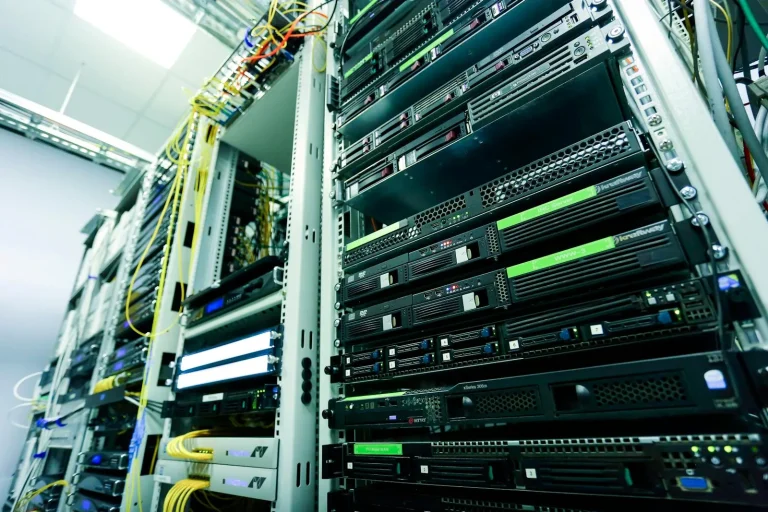
Traditional security surveillance is a passive recording system: cameras capture footage, that footage goes to storage, and humans review it after incidents occur. Artificial intelligence security surveillance changes the operational model from recording to real-time analysis — detecting threats, anomalies, and suspicious behaviors as they happen rather than after the fact. The scope of this transition is significant: over 1.2 billion surveillance cameras were operational globally in 2024, with more than 38% now equipped with embedded AI-based video analytics including facial recognition, object detection, and behavior analysis. The AI in video surveillance market reached $6.83 billion in 2026, growing at 14.18% CAGR toward $13.26 billion by 2031. What is driving this investment is the shift from reactive security to proactive detection — cameras that alert operators to threats in progress rather than cameras that document what already happened.
- AI in video surveillance market: $6.83 billion in 2026, growing at 14.18% CAGR to $13.26 billion by 2031; AI surveillance camera segment at $9.23 billion growing at 16.9% CAGR.
- Over 1.2 billion surveillance cameras globally in 2024; 38%+ equipped with AI video analytics including facial recognition, behavior analysis, and object detection.
- Edge AI processing is integrated into 44%+ of newly shipped surveillance devices, reducing detection latency to under 250 milliseconds for real-time alerts.
- Security and surveillance commands 37.13% of the AI video analytics market — the largest application segment; government and public safety holds 28.73% of end-user market share.
- Facial recognition market: $9.95 billion in 2026, growing at 15.97% CAGR to $20.88 billion by 2031, with enterprise entry control and public safety as primary deployment contexts.
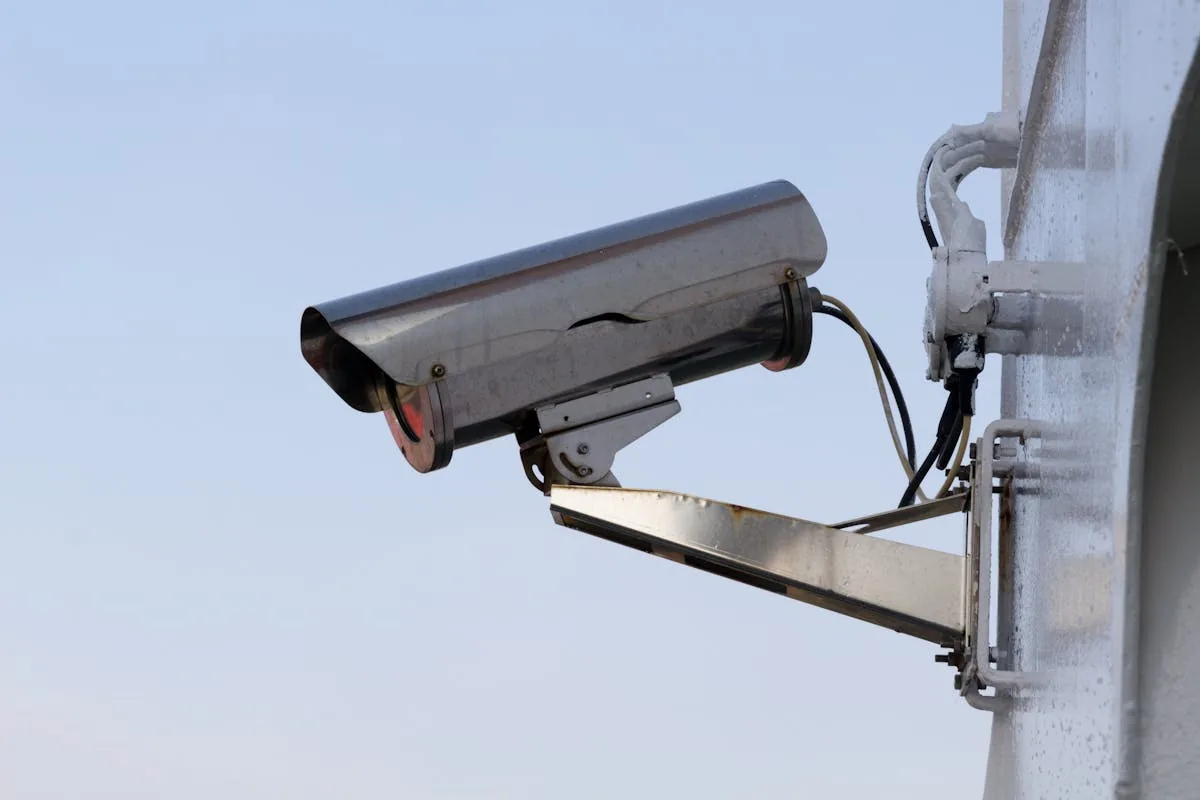
How AI Changes Security Surveillance: From Recording to Real-Time Detection
AI transforms surveillance cameras from storage endpoints into active sensing systems. Computer vision models running on the camera hardware or on backend video management servers analyze every frame for specific events: unauthorized entry into restricted zones, unattended objects, crowd density thresholds, vehicle license plate matches, and facial recognition against watchlists. When a trigger event occurs, the system generates an alert in real time — before an incident escalates — rather than after an operator manually reviews footage following an incident report.
Computer Vision and Behavioral Analytics
The core AI capability in modern surveillance systems is computer vision: deep learning models trained on large image datasets to identify people, objects, and behaviors with high accuracy across varying lighting conditions, camera angles, and environmental contexts. Beyond object detection, behavioral analytics models identify patterns that indicate elevated risk — loitering near high-value targets, erratic movement patterns, individuals entering restricted areas, or crowd behavior consistent with pre-violence dynamics. These behavioral signals are difficult for human operators to consistently detect across dozens of simultaneous camera feeds; AI processes all feeds simultaneously with consistent attention.
Behavioral surveillance is distinct from rule-based systems. Traditional systems trigger on specific events (motion detection, line crossing) with high false positive rates. AI behavioral models learn what normal activity looks like in a specific environment — a busy retail entrance looks different from a loading dock — and flag deviations from that environment-specific baseline. This reduces false positives significantly while improving detection of genuinely anomalous behavior.
Edge AI vs Cloud Analytics: The Architecture Shift
AI surveillance processing runs either at the edge (embedded directly in the camera hardware) or in the cloud (video streamed to remote servers for analysis). The shift toward edge processing is accelerating: 44%+ of newly shipped surveillance devices now integrate edge-AI processing, reducing detection latency to under 250 milliseconds for real-time alerts. Edge processing provides three operational advantages: speed (alerts generated without cloud round-trip latency), bandwidth efficiency (only relevant events transmitted rather than full video streams), and data security (video data that never leaves the facility cannot be intercepted in transit).
Cloud analytics retains advantages for complex processing tasks — large-scale facial recognition matching against extensive databases, multi-camera behavioral correlation across a campus, and long-term pattern analysis that requires significant compute. Physical security intelligence platforms that integrate surveillance data with external threat intelligence feeds typically run cloud-side, where AI models can correlate live camera data with geopolitical risk signals, social media monitoring, and historical incident patterns simultaneously. The 2026 architecture trend is hybrid: edge AI for real-time alerting, cloud AI for complex analysis and long-term pattern recognition.
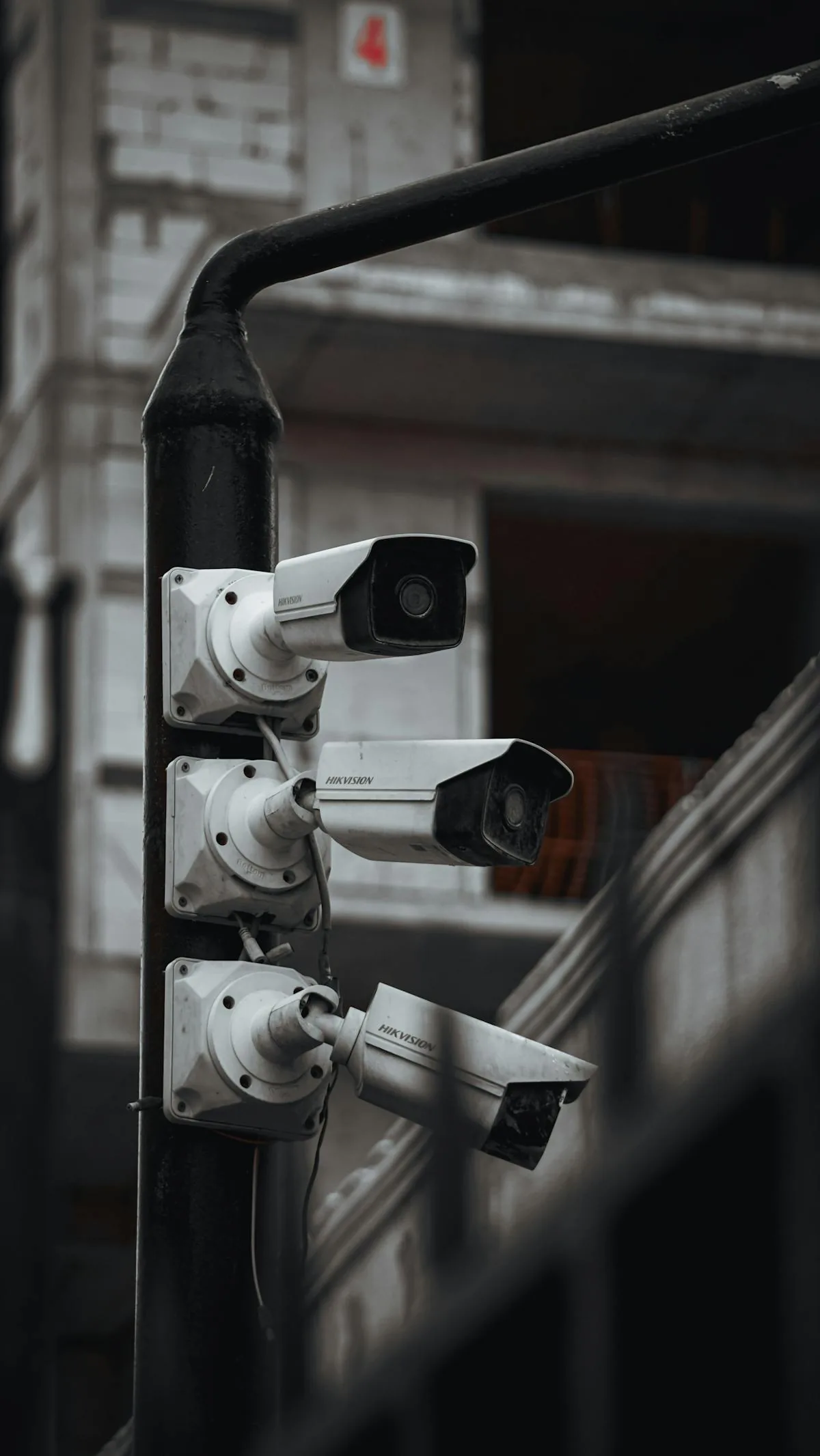
AI Surveillance Use Cases, Markets, and Deployment Context
The AI surveillance market spans government, enterprise, retail, healthcare, and smart city deployments — each with distinct requirements, performance expectations, and governance considerations. The diversity of use cases reflects how broadly computer vision capabilities transfer across contexts that share the fundamental challenge of monitoring large physical environments for specific events.
Enterprise and Retail: Access Control and Loss Prevention
Enterprise deployments of AI surveillance focus on two primary use cases: perimeter and access control (detecting unauthorized entry, verifying credentials, monitoring restricted zones) and employee and visitor safety. The facial recognition market — a core enterprise surveillance technology — reached $9.95 billion in 2026 and is growing at 15.97% CAGR toward $20.88 billion by 2031. Private businesses across office complexes, factories, and data centers use facial recognition at entry points to verify identity against credentialed databases without requiring badge presentation.
Retail is one of the highest-adoption segments. AI video analytics are deployed in over one-third of large retail chains for shopper behavior analysis, queue management, and inventory loss prevention. Computer vision tracks foot traffic patterns, identifies congested zones that signal staffing needs, and flags shoplifting behaviors in real time. A distinctive application: smart mirrors equipped with facial recognition analyze approximately 1.3 billion fitting-room sessions annually, generating product recommendations that have produced a 9% improvement in cross-sell rates — demonstrating how security infrastructure can generate commercial value alongside its protective function.
Government, Public Safety, and Smart Cities
Government and public safety accounts for 28.73% of the AI video analytics end-user market — the largest segment — reflecting investment in AI-enhanced surveillance for public transit, border control, law enforcement, and smart city infrastructure. Smart city deployments integrate AI surveillance with traffic management, emergency response routing, and public event monitoring into unified command center environments where operators receive consolidated intelligence across all camera feeds simultaneously.
The Asia Pacific region leads this segment’s growth: projected 23.77% CAGR through 2031, driven by smart city programs in China, Singapore, South Korea, and India that have made AI surveillance infrastructure a component of urban planning. North America maintains 32.44% of current market revenue, with government deployments concentrated in critical infrastructure protection and border security. AI’s ability to analyze behavioral patterns at scale that human monitoring cannot match applies here as much as it does in network security contexts — the computational capacity to process 1.2 billion camera feeds is the enabling constraint that AI addresses.
Privacy, Governance, and Accountability in AI Surveillance
AI surveillance — particularly facial recognition and behavioral analytics — operates at the intersection of security effectiveness and civil liberties. The same capability that identifies a genuine threat actor in a crowd can also enable mass tracking of individuals who have done nothing wrong. Governance frameworks for AI surveillance deployments increasingly address three specific requirements: defined use limitations (what the system is authorized to detect, and what it is prohibited from doing with that data), data retention limits (how long video and biometric data is stored and under what access controls), and algorithmic accountability (independent accuracy testing, documentation of error rates across demographic groups, and mechanisms for challenging incorrect identifications).
The regulatory environment is converging on these requirements across jurisdictions. Organizations deploying AI surveillance for security purposes should treat governance design as a prerequisite rather than a compliance afterthought — both because the legal landscape is tightening and because systems deployed without clear use limitations tend to expand beyond their original scope in ways that create organizational liability. The security concerns that apply to AI systems generally apply with additional force in surveillance contexts, where the data being processed is video of individuals in their daily lives.
Frequently Asked Questions
What is artificial intelligence security surveillance?
Artificial intelligence security surveillance is the application of computer vision, machine learning, and behavioral analytics to video monitoring systems, enabling real-time detection of threats and anomalous behaviors rather than passive recording for post-incident review. AI surveillance systems analyze camera feeds continuously to detect unauthorized access, behavioral risk indicators, unattended objects, crowd anomalies, and identity matches against watchlists — generating alerts as events occur.
How large is the AI surveillance market in 2026?
The AI in video surveillance market reached $6.83 billion in 2026, growing at 14.18% CAGR to $13.26 billion by 2031. The broader AI surveillance camera segment is valued at $9.23 billion in 2026, projected to reach $37.57 billion by 2035. The facial recognition market specifically is $9.95 billion in 2026, growing to $20.88 billion by 2031 at 15.97% CAGR. Over 1.2 billion surveillance cameras were operational globally in 2024, with 38%+ equipped with embedded AI analytics.
What is edge AI in surveillance?
Edge AI in surveillance refers to AI processing performed directly within camera hardware, rather than streaming video to remote servers for analysis. Edge-AI-enabled cameras detect and classify events locally, generating alerts in under 250 milliseconds without cloud round-trip latency. Over 44% of newly shipped surveillance devices now integrate edge AI. The advantages over cloud-only processing include lower latency, reduced bandwidth usage, and improved data security since video stays on-premises.
How is AI surveillance used in retail security?
AI surveillance in retail is deployed for shoplifting detection (behavioral computer vision identifying concealment actions), queue management (detecting checkout line lengths and triggering staffing alerts), shopper behavior analysis (foot traffic patterns, dwell time at displays), and access control for stockrooms and back-of-house areas. AI video analytics are used in over one-third of large retail chains, and smart fitting-room mirrors with facial recognition analyze 1.3 billion sessions annually — with a 9% improvement in cross-sell rates alongside the security function.
What are the main privacy concerns with AI security surveillance?
The primary privacy concerns with AI security surveillance are: mass tracking of individuals without suspicion or consent, accuracy disparities across demographic groups in facial recognition systems, indefinite retention of biometric and behavioral data, and scope creep beyond the stated security purpose. Governance frameworks for AI surveillance should define use limitations, retention schedules, access controls, and algorithmic accountability mechanisms including independent accuracy auditing and error dispute procedures.