School security decisions got more complicated when AI entered both sides of the equation. Districts are now evaluating AI-powered weapon detectors, video analytics platforms, and digital safety monitors while simultaneously defending against AI-assisted phishing and ransomware targeting student records. EdWeek reported in February 2026 that 51% of educators expect cyberattack severity to increase specifically because of AI — yet 78% of K-12 IT professionals are now purchasing AI-assisted managed detection and response platforms to fight back, according to CoSN’s 2025 State of Ed Tech District Leadership report. This guide covers the specific tools available, what they do, what they cost, and what a realistic deployment looks like.
- 78% of K-12 IT professionals are purchasing MDR platforms; 65% are deploying endpoint protection (CoSN 2025)
- AI weapon detection platforms like ZeroEyes, Omnilert, and IntelliSee respond in under 10 seconds with human verification
- Chelsea School District (Michigan) monitors nearly 200 cameras with 24/7 AI oversight
- ManagedMethods and Cisco offer AI-powered tools built specifically for Google Workspace and Microsoft 365 in schools
- Smaller AI security pilots cost tens of thousands; multi-campus deployments run six to seven figures over several years
AI Physical Security Tools Schools Can Deploy in 2026
Weapon Detection and Video Analytics Vendors
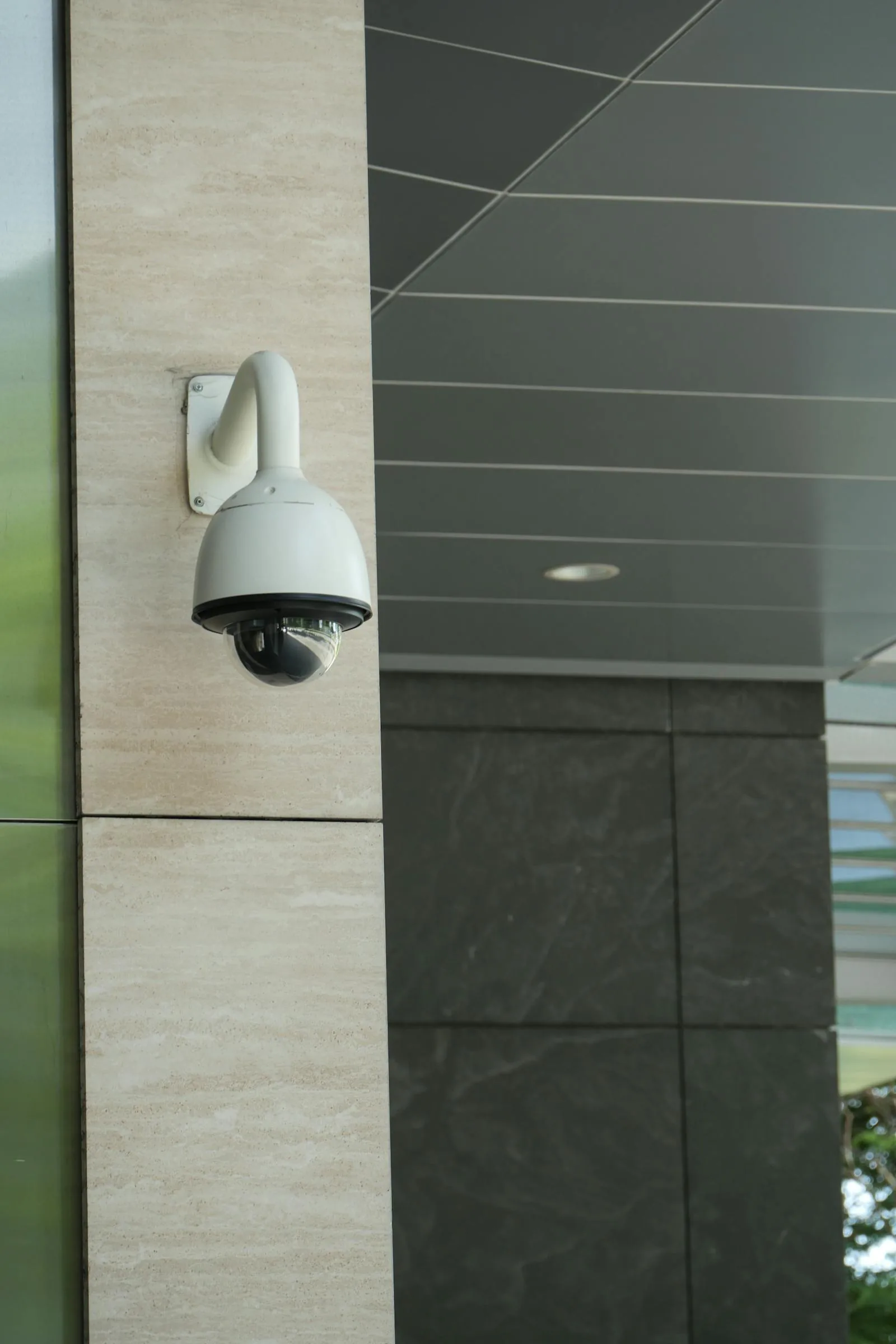
The leading AI weapon detection platforms for K-12 schools in 2026 are ZeroEyes, Omnilert, IntelliSee, VOLT AI, Actuate, and IronYun Vaidio. All of them analyze existing IP camera feeds — no hardware replacement required for standard ONVIF-compliant cameras — and route potential alerts to human verification before contacting staff or emergency services. Response time from visual detection to human-verified alert is typically under 10 seconds.
The platforms vary in scope. ZeroEyes focuses specifically on firearms using pattern recognition trained on weapon geometry and carry behavior. Omnilert extends to broader threat analytics including fights, crowd anomalies, and unauthorized access. IntelliSee takes an even wider approach — its platform detects trespassing, visible weapons, slip-and-fall hazards, and facility concerns through a single camera integration, making it useful for non-security staff who need to monitor facility issues alongside safety events. VOLT AI bundles camera analytics with visitor management and emergency notification in one platform.
Chelsea School District in Michigan represents a working deployment model: the district monitors nearly 200 upgraded cameras with 24/7 AI oversight. When the system flags an event, the workflow runs alert → human verification → automated response (staff notifications, door locks, and police contact where warranted). That sequence — AI detection plus mandatory human review — is the architecture all responsible deployments share. Video retention in these systems follows a standard pattern: routine footage kept 30–90 days, incident clips retained longer for investigation. Evaluating these platforms alongside broader AI security concerns helps districts weigh where automation genuinely reduces risk versus where it creates new liability.
AI Visitor Management and Access Control
Visitor management systems with AI capabilities check arrivals against sex offender registries, criminal databases, and custom district watchlists before they reach the front office. Some platforms add license plate recognition for parking lot monitoring. More advanced systems use facial recognition to match individuals against watchlists and track movement across campus — though several states have restricted or banned facial recognition in K-12 settings due to accuracy disparities for people of color and gender-nonconforming individuals.
The practical case for AI visitor management is administrative efficiency: a district office staff member no longer needs to manually run ID checks against external databases. The risk is false positives triggering unnecessary responses, and civil liberties exposure from surveillance of minors. Districts that deploy these systems need written protocols for what happens when a flag fires, how long facial recognition logs are retained, who can access them, and what the appeal process is for individuals incorrectly flagged.
Deployment Timeline and Cost Ranges
A realistic AI physical security pilot follows a three-phase timeline. First semester: deploy in one or two high-priority locations, typically main entrances or areas with prior incidents. Months one and two after pilot: evaluate alert accuracy, false positive rates, staff response workflows, and integration with local law enforcement. Following school year: expand to remaining campus locations if the pilot benchmarks justify it.
Cost scales with deployment size. Smaller pilots run in the tens of thousands of dollars. Full multi-campus deployments with hardware upgrades, ongoing software licensing, and monitoring center integration can reach six or seven figures over a multi-year contract. The human oversight requirement — someone must verify every alert — means staffing costs are part of the total picture, not just the software license. Districts evaluating these systems should budget for verified response protocols and staff training, not just the platform itself.
AI Cybersecurity Tools for K-12 Networks and Student Data

Network Security: MDR, Firewalls, and Zero Trust
According to EdTech Magazine, 78% of K-12 IT professionals are now purchasing managed detection and response (MDR) platforms, 65% are deploying endpoint protection, and 57% are adopting next-generation firewalls. Those numbers reflect a shift from reactive patching to continuous monitoring — which is what AI-assisted security operations make possible at a price point K-12 budgets can access through managed service providers.
The architecture that EdTech and cybersecurity frameworks recommend for districts includes network segmentation (student devices isolated from administrative systems), multifactor authentication for all staff accounts, zero trust access controls, and identity lifecycle management for departing staff. Palo Alto Networks and Cisco are the named enterprise vendors most frequently deployed in larger districts. Smaller districts typically access these capabilities through MDR providers that bundle monitoring, response, and compliance reporting into a per-device or per-user subscription. Understanding the full capability set of AI security tools built for enterprise environments helps district IT staff benchmark K-12 managed service offerings against what’s available commercially.
Cloud Application and Email Security for Schools
K-12 schools run primarily on Google Workspace for Education or Microsoft 365 for Education, which creates a defined attack surface. ManagedMethods’ Cloud Monitor platform was built specifically to protect both environments, using AI to detect phishing attempts, unusual account behaviors, and lateral phishing activity (where a compromised student account is used to attack staff). The platform uses chain-of-thought AI technology to improve threat detection accuracy by working through multi-step reasoning about whether a given behavior pattern is benign or malicious.
Cisco Secure Email Threat Defense and Cisco Umbrella (DNS-layer security) are the enterprise tools most frequently mentioned in K-12 deployments at the district level. Cisco AI Defense adds a layer specifically for AI application governance — it detects both sanctioned and shadow AI applications running in school networks and can block students or staff from connecting to unsanctioned AI tools through district-issued devices. That capability has become more relevant as generative AI adoption in classrooms has outpaced district AI governance policies.
Student Digital Safety Monitoring Platforms
A separate category of AI security tool monitors student activity on school-issued devices for self-harm signals, threat language, bullying, grooming, and drug-related content. These platforms — including GoGuardian, Gaggle, and Securly — operate only on school-owned devices during designated monitoring windows. Securly’s Parent AI View feature, announced in 2026, allows parents to see how their children are using AI on school-issued devices both during and after school hours, addressing parent concerns about unsupervised generative AI use.
The distinction between cybersecurity tools and digital safety monitoring matters for procurement: cybersecurity protects the network and data; digital safety tools protect students from harm and protect districts from liability when a student accesses dangerous content on district equipment. Both categories require FERPA-compliant data handling. Districts should review vendor data processing agreements for both tool types before deployment, since student activity logs generated by digital safety platforms constitute educational records under FERPA if they’re tied to identifiable students.
The clearest pattern across all these tool categories is that point solutions purchased in isolation — one firewall here, one safety monitor there — underperform compared to integrated platforms that share data across physical, network, and application layers. Districts with limited IT staff get more value from managed service providers who bundle AI security capabilities than from assembling individual tools. The role of artificial intelligence in cyber security more broadly is shifting toward this unified approach, and K-12 technology directors are starting to demand the same from vendors.
Frequently Asked Questions
What AI security tools are most used in K-12 schools?
For physical security, ZeroEyes, Omnilert, IntelliSee, and VOLT AI are the leading AI weapon detection and video analytics platforms. For cybersecurity, MDR platforms (78% adoption among K-12 IT professionals), endpoint protection (65%), and next-generation firewalls (57%) are most common, with ManagedMethods and Cisco tools frequently deployed for Google Workspace and Microsoft 365 environments.
How much does AI security for schools cost?
Smaller AI security pilots run in the tens of thousands of dollars. Full multi-campus deployments with monitoring center integration can reach six to seven figures over a multi-year contract. Cybersecurity managed services are typically priced per device or per user and are more accessible for smaller districts than enterprise platform licenses.
How fast does AI weapon detection work in schools?
Leading platforms like ZeroEyes and Omnilert typically complete detection and human verification in under 10 seconds. Human validators review every alert before notifying staff or law enforcement — automatic escalation without human review is not the standard architecture for responsible school deployments.
Do AI security tools for schools have to comply with FERPA?
Yes. Any AI security tool that processes or stores data tied to identifiable students — including digital safety monitoring logs, access control records, and facial recognition data — must comply with FERPA. Vendors must sign data processing agreements with the district before being deployed, and the district is responsible for verifying that vendor data handling practices meet FERPA requirements.
Can small school districts afford AI security?
Yes, through managed service providers. Smaller districts without dedicated security staff can access MDR, endpoint protection, and email security through subscription-based managed services, which bundle AI security capabilities at per-device pricing. State cybersecurity grants and E-Rate program expansions in 2025 have also made some AI security tools more accessible for underfunded districts.